MUHC in the Media - April 13, 2026
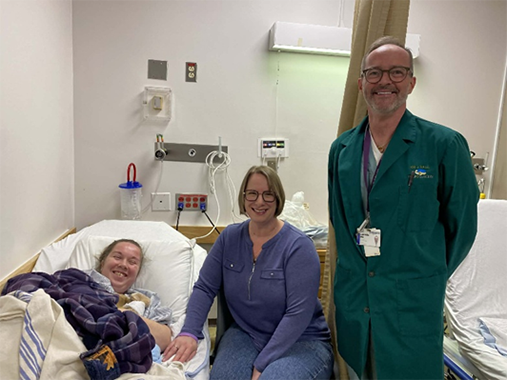
Goodbye, epilepsy?
At 25, Gabrielle Moreau-Morneau has been living with epilepsy for several years. Determined to better understand her condition and regain control of her life, she embarked on a medical process aimed at precisely identifying the areas of her brain where her seizures originate. At the end of March, Dr. Jeffery Alan Hall of the Neuro performed a delicate procedure, paving the way for more targeted treatments and potentially even a cure. La Presse was granted privileged access to the operation.
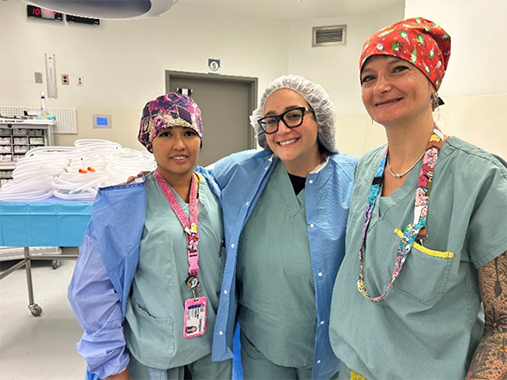
Having surgery… while protecting the planet: it’s possible!
A pilot project using reusable breathing circuits was recently rolled out over several weeks in the operating rooms across the MUHC’s various sites. According to respiratory therapist and technical coordinator in the operating room at the Royal Victoria Hospital, Stéphanie Hébert, it is possible to save up to 4,500 circuits per year by switching to the reusable model. To learn more, read the article published in La Presse

Under-resourced tuberculosis care causes hardship: In new study, Nunavik Inuit call for person-centred approaches
Photo: C.É.Burdet
TB remains a critical public health issue in Nunavik, where incidence rates are up to 1,000 times higher than among people born elsewhere in Quebec. Yet access to care continues to be shaped by significant barriers, as highlighted in a new study published in CMAJ and led by a majority of Inuit and First Nations research team at The Institute and the Nunavik Regional Board of Health and Social Services. Co-led by Dr. Faiz Ahmad Khan, the study highlights the experiences and perspectives of Inuit communities affected by the current tuberculosis crisis and calls for effective resources to drive a shift toward Inuit-led, supportive care that is better aligned with the needs and realities of communities. CBC Breakaway, CBC, Radio-Canada, La Presse, Noovo info, Le Devoir, City News
Care for every child at the MUHC
Lack of access to primary care is sometimes cited as one of the causes of emergency overcrowding. Dr. Matthew Donlan, pediatrician at the Montreal Children’s Hospital, decided to tackle the problem head on and find community doctors for follow-up after hospitalization for all children cared for at the McGill University Health Centre (MUHC). CJAD 800, CTV News

Developing methods that help reduce the number of animals used in biomedical research
Dr. Lucie Côté, veterinarian and the Director of the Animal Resource Division at the Research Institute of the MUHC, contributed to a report on the development of alternative methods to animal research. Although the development of such technologies to reduce the use of animals in biomedical research is promising, animal research remains an essential part of developing life-saving treatments. Dr. Côté emphasized that "Science is based on standards. Standards change all the time. We need to adapt. But I think the important point is that science should guide us, it shouldn't be politics or personal opinion that guides us in this very important discussion. We all have loved ones that benefited from the advancement in biomedical research. And I think everyone can understand that. We need to advance in a very cautious way. We can't say we're going to stop what we're doing without having tested new methods.” Here at The Institute, animal research is conducted only when no suitable alternative exists. Researchers use a variety of complementary methods, in addition to animal research, to advance science. CBC Quirks and Quarks (audio clip), CBC web report.
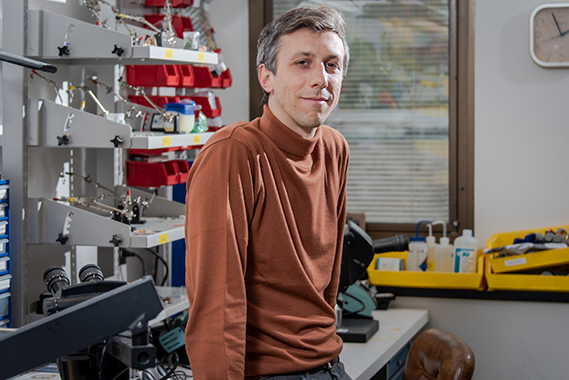
The brain’s internal compass and the preservation of our memories
A study led by Adrien Peyrache at the Neuro reveals that the brain’s internal compass remains remarkably stable over time. The findings suggest that this sense of direction may serve as an anchor for memory in relation to the Alzheimer disease. Radio-Canada

Decline in cancer mortality due to screening
According to the new study “Projection of the cancer burden in Canada in 2026,” published in the Canadian Medical Association Journal, 254,000 Canadians will be diagnosed with cancer, but early screening and new treatments are offering renewed hope. Dr. Nicole Ezer, a respirologist and Director of the Lung Cancer Screening Program at the MUHC, highlights the importance of lung cancer screening. La Presse

A lunar crater named in honour of a neonatal nurse
The fact that a lunar crater has been named in honor of Caroll Wiseman, a neonatal nurse, has moved many parents whose children were hospitalized at birth. Joy Vanides Deneen, whose son spent six months in the Neonatal Intensive Care Unit at the Montreal Children’s Hospital, talks about it in Today.