MUHC in the Media - October 12, 2026

Toward the remission of early-stage type 2 diabetes
Dr. Kaberi Dasgupta recently presented the results of a clinical trial on remission of type 2 diabetes. Published in Lancet Regional Health Americas, the results show that a low-calorie diet combined with a structured exercise program led to remission in 50% of participants with early-stage type 2 diabetes. Medscape, MedIndia
Why do some children experience temporary hallucinations?
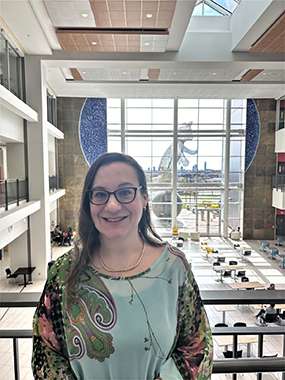
Hearing a voice or seeing something that isn’t there can be unsettling for children and their parents. Yet hallucinations can sometimes occur during childhood without necessarily indicating a psychiatric disorder. On Radio-Canada’s Moteur de recherche, Dr. Eva-Flore Bui-Xaun, head of the Department of Psychiatry at the Montreal Children’s Hospital, explains this phenomenon and what it can tell us about brain development on the show Moteur de recherche. Radio-Canada

Montreal innovation could improve multiple sclerosis monitoring
A Montreal-developed software program could make it easier to monitor people living with multiple sclerosis and allow for more timely medication adjustments. Developed by Dr. Étienne de Villers-Sidani, a neurologist at The Neuro (Montreal Neurological Institute-Hospital), ETNA-MS uses eye movements to assess disease progression. Approved by Health Canada in 2024, the 15-minute tablet-based test is now available at more than 30 pharmacies across Quebec. La Presse
Intensive care: a world apart
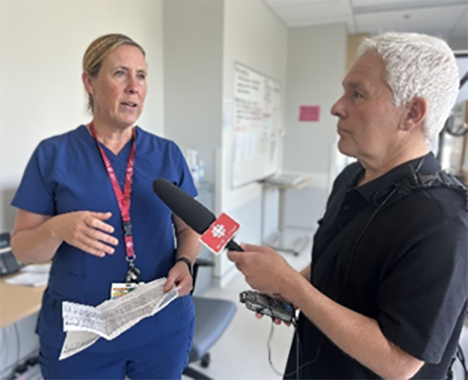
In the intensive care unit, some patients recover, while others do not survive. The unit cares for the most critically ill patients, whose experiences can have lasting effects long after they leave the hospital. The MUHC’s recovery program for patients who have spent an extended period in intensive care provides follow-up support for survivors. The program also offers support groups where patients can connect with others who have had similar experiences. Caroline Hardy, a clinical nurse, and Dr. David Hornstein are two key members of this team. They spoke with Radio-Canada journalist Éric Plouffe about the program. TOUT TERRAIN, radio-canada.ca

Is the plague making a comeback?
The quarantine of 200 employees at a plague research institute in Siberia has sparked international concern. The suspicious death of a technician at the facility has revived fears of a return of the plague epidemics that devastated populations during the Middle Ages. However, Dr. Cédric Yansouni, Director of the Division of Infectious Diseases at the MUHC, believes, like other experts, that the risk of the plague causing another pandemic is very low. La Presse

Breast cancer in the age of social media
Social media has become a major source of health information. However, deliberate disinformation, the sharing of unverified claims, and information taken out of context can create doubt and undermine trust in healthcare professionals. Dr. Ari Meguerditchian, a surgical oncologist, says he has adapted his approach to this new information landscape. “I ask patients: What have you read? What have you learned? Tell me what you know, and we’ll work from there.” Clin d’œil

The flu could take hold earlier this fall
Several infectious disease experts from the MUHC, including Dr. Jesse Papenburg of the Montreal Children’s Hospital and Dr. Don Vinh, gave interviews with RDI and other news outlets over the past week. They discussed the circulation of the flu virus and the opening of appointment bookings for flu vaccination on October 13. Radio-Canada, TJ Montréal, Global News, The Gazette

Accidents can happen in an instant on an electric scooter
A man from Trois-Rivières lost his life in a collision between his electric scooter and a car. As these devices become increasingly popular, their higher speeds relative to conventional, non-motorized scooters can lead to serious or even fatal injuries in the event of an accident. Michel Abouassaly, Manager of the Trauma Program at the Montreal General Hospital, spoke with CJAD about the risks associated with electric scooter use. CJAD

Teaching children how to approach dogs safely
The emergency department at the Montreal Children’s Hospital (MCH) treats an average of 100 cases of children for dog bites per year. In most cases, the child who was bitten already knows the dog. Teaching children how to approach dogs safely is therefore important, even when the animal is familiar to them. Dr. Sabrina Cugno, a plastic surgeon at the MCH, and Debbie Friedman, director of the Trauma Centre at the MCH, spoke with La Presse about the issue.