Social Work Week
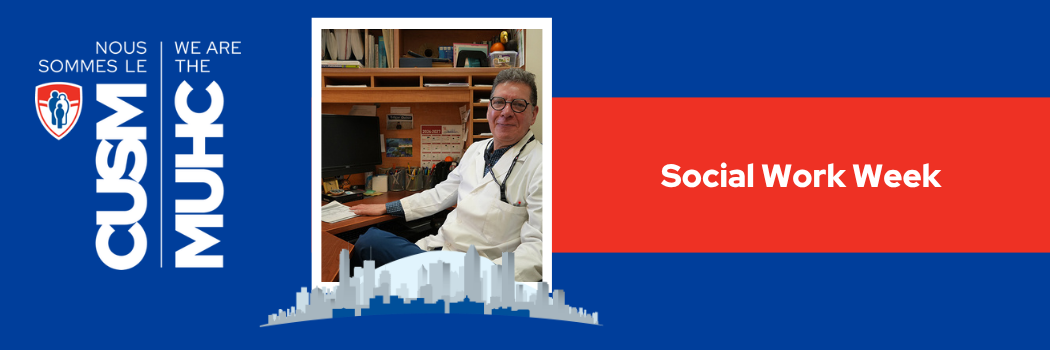
A day with Pedro Mejia, social worker in neuro-oncology
Pedro Mejia has worked at the MUHC for 26 years and has been a social worker at The Neuro — the Montreal Neurological Institute-Hospital — for nearly 18 of those years. His practice is dedicated to patients living with malignant brain tumors. A demanding role, at the intersection of care, support, and human connection.
In neuro-oncology, some qualities cannot be learned from books.
“Empathy and compassion are essential. You have to understand distress without losing the professional distance the role requires. It’s a delicate balance between flexibility and patience.”
A role often unknown, always essential
The role of a hospital social worker is still unclear to many.
“Some patients see us and say, ‘Why? I don’t have any problems.’ Others think of child protection services,” says Pedro. “We have to explain that we’re here to support them.”
Supporting someone means providing emotional help, but it also means connecting the patient with their family, the medical team, and outside resources. It’s about helping them navigate a complex healthcare system, understand their situation, and make decisions.
“We assess patients’ strengths and needs, help them with paperwork, and guide them to the right resources. Sometimes people see us as advocates. Sometimes as resource navigators. In reality, we’re a bit of both.”
A profession rooted in humanity
Over the years, Pedro has witnessed the rapid evolution of neurosurgery.
“I remember the first surgery I attended back in 2001. Today, the techniques are much less invasive.”
But beyond technological advances, it’s the human stories that endure.
“I recall a patient from India, an immigrant like me. She had worked hard to earn a master’s degree in engineering. Then she learned she had a malignant brain tumor. It affected me deeply. I even attended her funeral. It was my way of coming full circle.”
In neuro-oncology, supporting someone sometimes means walking alongside the patient until the very end of their journey.
“An important part of our role is being present when the illness can no longer be cured,” explains Pedro. “We help put words to what’s coming, prepare, and provide comfort.”
A day without routine
At The Neuro, no two days are the same.
Pedro starts by reviewing his patient list. The volume can be high — he may meet with up to ten patients a day, depending on neurosurgery admissions.
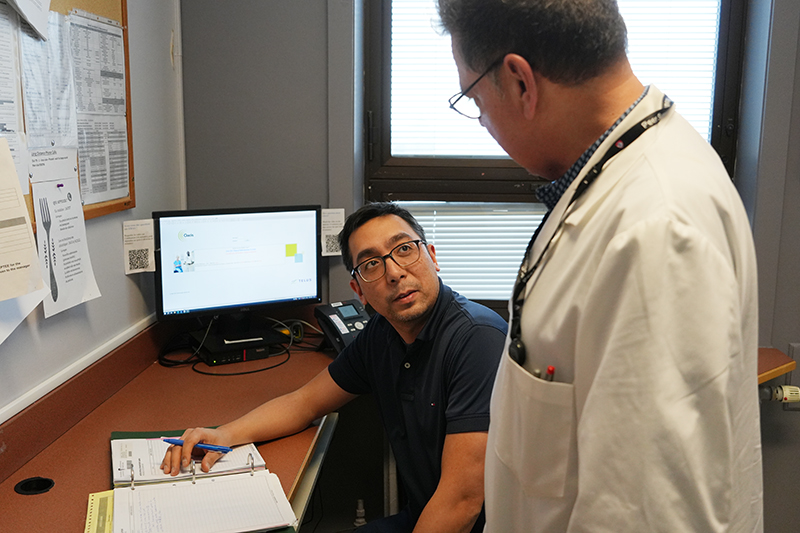
Next, he makes rounds through the units. He speaks with nurses, occupational therapists, physiotherapists, and neurosurgeons.
“We work very closely together. When I meet with the doctors, they know it’s important.”
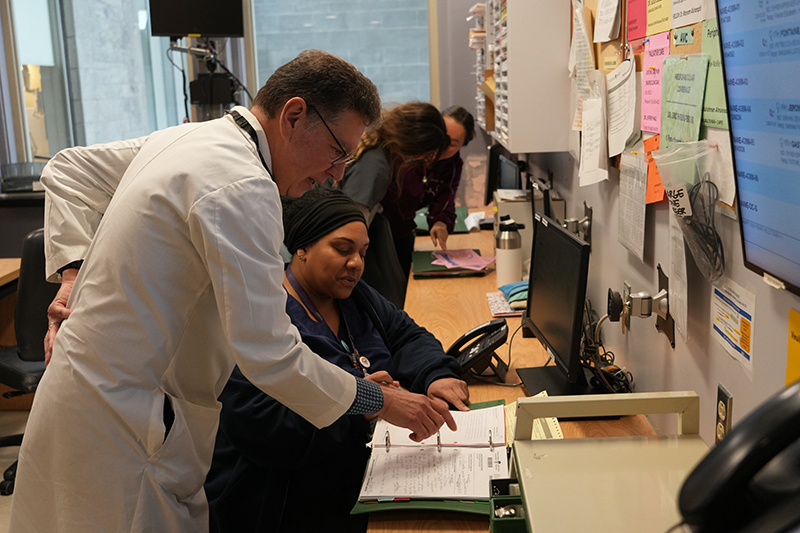
Then come the meetings with patients. He explains his role, answers questions, and eases concerns.
“I try to help them see the positive. Of course, for a patient with a malignant brain tumor, the positive isn’t always obvious, but here at The Neuro we can at least say: you are in the best place given the circumstances. You have access to top-notch teams, advanced technologies, and strong support. We will be with you every step of the way.”
A social worker’s role also includes helping plan discharges, making sure each patient returns to a safe and suitable environment. This isn’t always easy, given that we work in a neurological hospital.
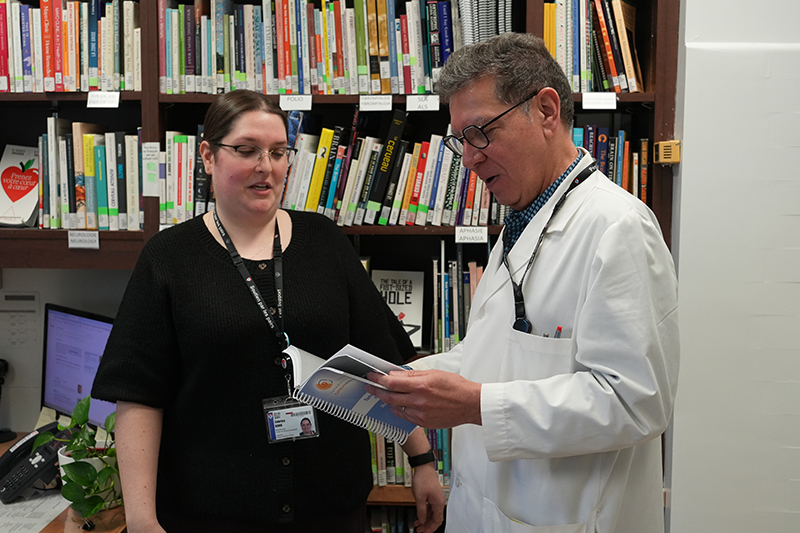
Wednesday mornings are devoted to multidisciplinary meetings — the “rounds” — where cases are discussed as a team.
Finally, the day usually ends with writing evaluation reports.
“We are the MUHC”
For Pedro, working at The Neuro is much more than a job.
“My connection with The Neuro is deep. I’m fortunate to work with competent and respectful people who understand that medical and social care go hand in hand.”
His personal journey has deeply shaped his commitment. “I’ve lived in several countries and had to restart part of my academic path when I arrived in Canada, eventually redirecting myself toward social work. Canada has given me a lot. Even though I had to reinvent myself — turn myself inside out, like a tortilla — the resilience I developed helps me now to help patients. Today, I’m proud to say I do work that makes sense. That’s the most important thing.”
For Pedro, “We are the MUHC because we can work together across disciplines and put the patient at the centre. We also recognize that behind every file, there is a person, a story.”