MUHC leadership helps bring Québec’s helicopter air ambulance program to life
Patients across Québec now have faster access to life-saving specialized care thanks to the launch of the province’s medical helicopter service – a milestone made possible in part through the leadership and advocacy of experts from the McGill University Health Centre (MUHC).
“The MUHC is proud to contribute to the launch of this program in the Montréal region, both as one of the many receiving centres and as a partner providing logistical support for the operation of the Mirabel base," says Charles Hubert Blouin-Delisle, Assistant to the Associate President and Executive Director at the MUHC. "We are confident that this collaboration with Québec’s Aeromedical Evacuation Service (EVAQ) will continue to develop over the coming years, benefiting our teams and patients by bringing together our expertise and know-how.”
For years, Québec was the only province without a helicopter air ambulance service, leaving critically ill or injured patients in some regions facing lengthy ground ambulance or fixed-wing aircraft transfers before reaching the specialized care they needed. This new service begins to close that gap by providing faster transport, particularly in cases of major trauma, stroke, heart attack and other urgent medical or surgical emergencies.
The program is being introduced in two phases. The first began this summer, transporting patients to tertiary care centres in Québec City. A second phase, launched September 28, serves the Montréal region. The program will continue to expand as additional infrastructure is developed, including hospital helipads such as the one planned at the MUHC, with support from the Montreal General Hospital Foundation, the MUHC Foundation and the Montreal Children’s Hospital Foundation.
Leading a province-wide coalition
Years of collaboration between MUHC clinicians, project leaders and healthcare partners across Québec helped bring the program to life. Leaders from the MUHC Adult Trauma Program — including Drs. Tarek Razek, Dan Deckelbaum, David Mulder and Kosar Khwaja — brought together more than 40 physicians representing hospitals and healthcare organizations from across the province.
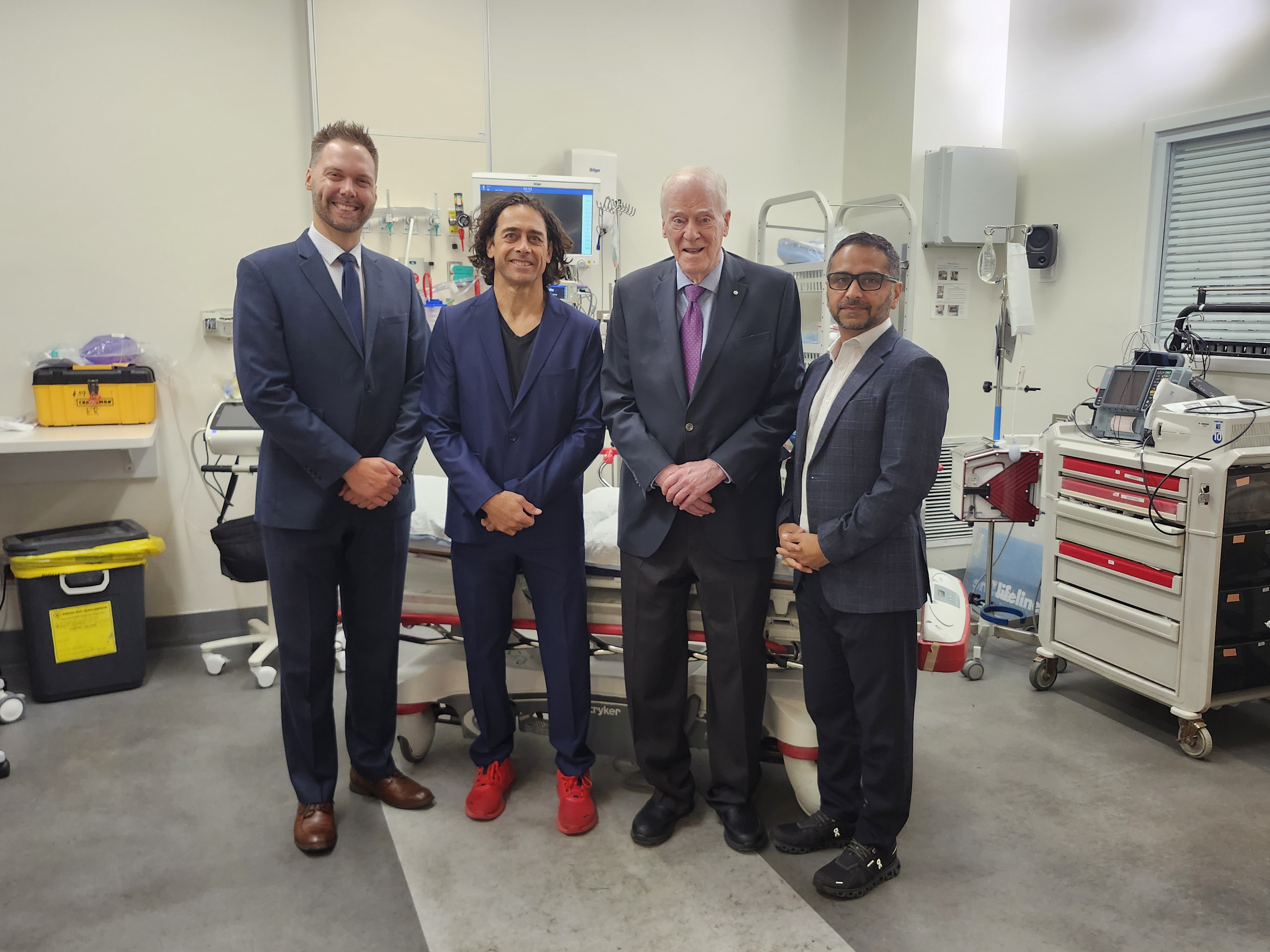
“A very powerful message comes across when you have experienced medical leaders from across Québec who are all advocating for the same thing,” says Steven Di Marco, MUHC Trauma and Acute Care System Manager.
As project manager, Steven drew on the experience of Ontario's air ambulance service to identify best practices and develop a clinical, operational and financial case for Québec's program. The resulting proposal helped demonstrate that a helicopter air ambulance service would improve patient outcomes while strengthening emergency care across the province.
"It was a grassroots initiative to make a helicopter air ambulance program a priority for the province,” he says. “It took work from all of us, and MUHC leaders played a pivotal role, together with our partners across Québec, in making this happen."
Collaboration across specialties
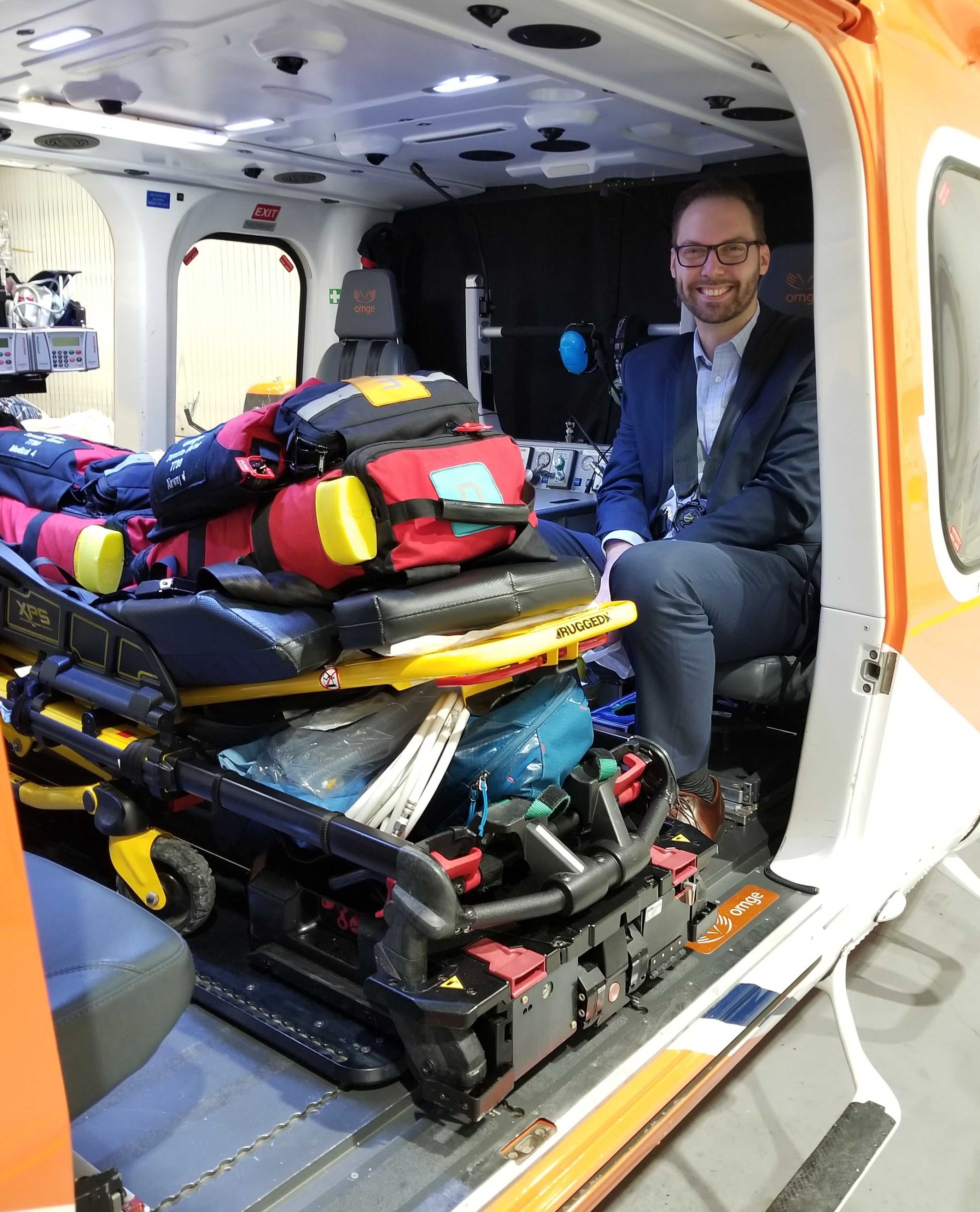
Working alongside partners across Québec, teams from neonatal, pediatric and adult care at the MUHC helped shape the program. Contributors include Drs. Anne-Marie Gosselin, Tanya Di Genova, Anab Lehr and François Olivier, along with Debbie Friedman, Trauma Director at the Montreal Children’s Hospital.

“Helicopter transport will further strengthen our role as a provincially designated Trauma Centre caring for children, adolescents and families, enhancing our ability to deliver state-of-the-art, time-sensitive treatment and interventions. It will also improve access to tertiary and quaternary specialized, life-saving treatment for critically ill patients, including our most vulnerable neonates,” says Debbie Friedman.
“For more than two decades, we have advocated alongside our adult trauma colleagues for a provincial helicopter transport system and are proud to have helped advance this initiative by bringing together key stakeholders at the Glen site. Together with our air transport and pre-hospital partners, referring hospitals and the provincial trauma network, this investment will strengthen equitable access to trauma and other life-saving care across Québec. When every minute counts, every patient deserves the right care at the right time,” she adds.
The MUHC is proud to support this major advancement and remains committed to providing timely, high-quality care to patients of all ages, whether they arrive by ground ambulance or by air.