A first at the MUHC: vital signs transmitted in real time at the MGH
A new technology is now part of everyday care at the Montreal General Hospital (MGH). Since November 11, new vital signs machines have been transmitting data in real time directly to patients’ medical records in OACIS — a first at the MUHC.
A total of 70 machines, one for each patient, have been deployed on the 12th- and 15th-floor units and Medical day hospital. By automating several steps, the new technology streamlines nurses’ work and saves valuable time. Nurses no longer need to go to a computer to enter vital signs into OACIS.
The time saved is estimated at about four minutes for each set of vital signs, giving nurses more time to remain at the bedside with their patients. Automated transmission also helps reduce the risk of transcription errors, optimize workflows, and permit documentation at point of care for all clinicians. The vital signs machines were also selected for their long service life and low maintenance requirements.
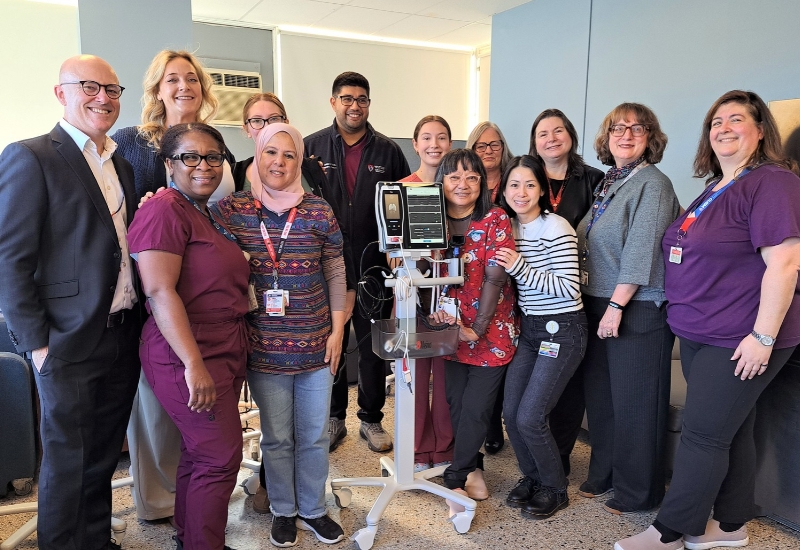
Led by Samia Saouaf, Nursing Practice Consultant, and Kamila Bober, Biomedical Engineer, the project is the culmination of two years of work and close collaboration among Nursing, Biomedical Engineering and Equipment Planning, Information Services, and the vendor. It was made possible thanks to the generous support of the Montreal General Hospital Foundation.
Thank you to all the teams who helped bring this project to life. Their collaboration is now paving the way for a gradual rollout to other units and clinical areas across the MGH in the coming months.