The Achilles' heel of pancreatic cancer could pave the way for new treatments
The discovery of a vulnerability in pancreatic cancer offers hope for the development of innovative targeted therapies.
A team from the Research Institute of the McGill University Health Centre (The Institute), led by Jean-Jacques Lebrun, Ph.D., has identified a protein that pancreatic cancer cells rely on to survive and grow. This discovery opens a promising avenue for the research and development of more effective and targeted therapies to treat one of the most aggressive and deadly cancers.
Pancreatic ductal adenocarcinoma (PDAC), the most common form of pancreatic cancer, is currently the third leading cause of cancer death in Canada and could become the second leading cause by 2040. With a 5-year survival rate of only 12%, it is one of the deadliest types of cancer. It is often detected at a very advanced stage, making it particularly difficult to treat.

“Pancreatic cancer is largely resistant to current therapies such as chemotherapy and immunotherapy. Treatment options offer few benefits and often come with significant side effects, hence the need to find other alternatives,” explains Prof. Lebrun, a senior scientist in the Cancer Research Program at The Institute and the study’s principal investigator, whose findings were recently published in Molecular Cancer.
A protein that helps pancreatic cancer survive
Prof. Lebrun’s team has discovered that the HSPE1 protein is involved in two cellular signaling pathways, which are communication systems that control how pancreatic cancer cells behave and survive. This protein is essential for the functioning of mitochondria, the cells’ “power plants”, which produce the energy needed for survival and proper functioning.
More specifically, the HSPE1 protein helps mitochondria protect themselves and adapt to various stresses, such as a lack of nutrients. Without this protection, the mitochondria can no longer function properly, which can ultimately threaten the survival of cancer cells.
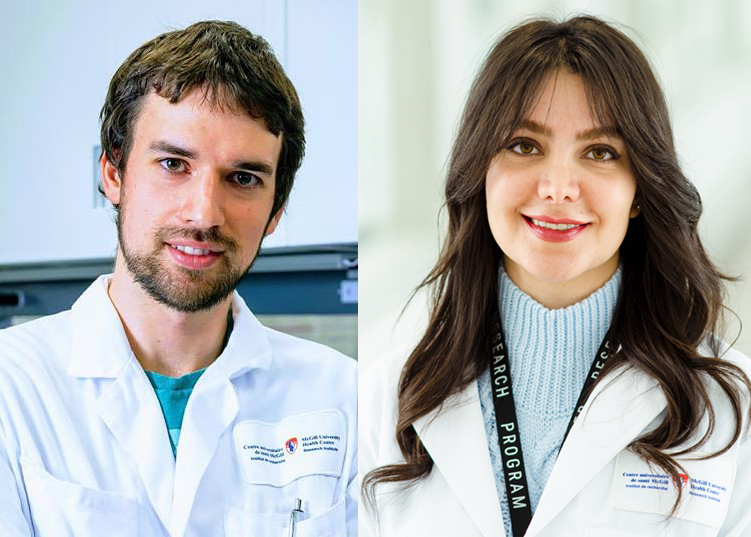
The HSPE1 protein also helps regulate the cell cycle and keep cancer cells alive. Without it, mitochondria stop functioning properly, triggering the self-destruction of cancer cells. The team then showed that cancer cell survival depends on two parallel signaling pathways. When they blocked both pathways using specific inhibitors, tumour growth slowed significantly.
“We have demonstrated that simultaneously targeting both pathways is much more effective than blocking just one or the other, thereby revealing a new combined therapeutic strategy for pancreatic cancer,” says Prof. Lebrun.
This study lays the foundation for future clinical applications by identifying a clear target for developing new drugs that can simultaneously target two pathways essential to the growth and survival of pancreatic cancer cells.
A detective's work
The team identified the HSPE1 protein using a powerful genetic screening approach that uses CRISPR-Cas9 technology, a genome-editing tool.
“Like a detective, we scanned the genome to study the role of each of the 20,000 genes in the processes that ensure the growth and survival of pancreatic cancer cells,” explains Dr. Lebrun. “The protein, produced by the HSPE1 gene, stood out from the rest, and the team pursued further research to understand how it works and how to harness it for therapeutic purposes.”
To carry out this research, Prof. Lebrun and his team studied mice that had been implanted with genetically modified cancer cells as well as cells derived from patient tumors.
“Using these in vivo models allowed us to determine which genes are actually involved in the survival of cancer cells within real tumors,” says Prof. Lebrun.
The work carried out as part of this study offers a glimmer of hope in the fight against cancer. Further studies could explore whether the HSPE1 protein plays a role in other types of aggressive cancers.
About the study
Identification of HSPE1 as a new actionable cancer vulnerability leads to an innovative and effective combination therapy for pancreatic ductal adenocarcinoma by Jean-Jacques Lebrun, Julien Boudreault, Shima Rahimirad, Ni Wang, Gang Yan, Leslie Chaltel Lima, Sophie Poulet, Meiou Dai, and Suhad Ali has been published in Molecular Cancer (IF 34). The study was funded by the Canadian Institutes of Health Research (CIHR).
DOI: 10.1186/s12943-026-02587-9
Media contact
Evelyne Dufresne
Information Officer
McGill University Health Centre (MUHC)
[email protected]