About the MUHC

A Tradition of Excellence

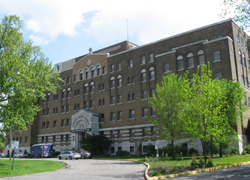
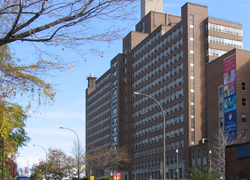
The McGill University Health Centre (MUHC) is one of the world’s foremost academic health centres. Building on the tradition of medical leadership of its founding hospitals, the MUHC provides exceptional multidisciplinary patient-centric care. Affiliated with the Faculty of Medicine of McGill University, the MUHC continues to shape the course of academic medicine by attracting clinical and research expertise from around the world, assessing the latest in medical technology, and training the next generation of medical professionals.

Click here to get hospital addresses and maps. Building on the tradition of medical leadership of these founding hospitals, the MUHC continues to shape the course of academic medicine by attracting clinical and research authorities from around the world and by training the next generation of medical professionals. And it continues to provide the best care for life to patients of all ages.

Our Mission

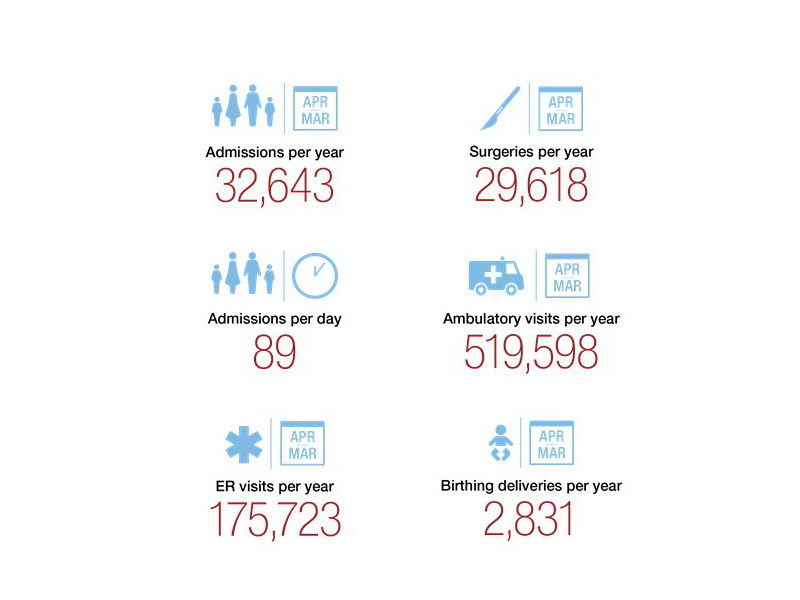
Clinical Care: Our multidisciplinary teams of healthcare professionals provide tertiary and quaternary care to patients from across Quebec and elsewhere. We also provide primary and secondary care and trauma emergency services to adults and children in the Montreal region. The eight clinical missions of the MUHC are: Pediatric Medicine (The Montreal Children’ s Hospital), Medicine, Surgery, Neurosciences, Women’s Health, Mental Health, Cancer Care, and Lachine & Camille Lefebvre.

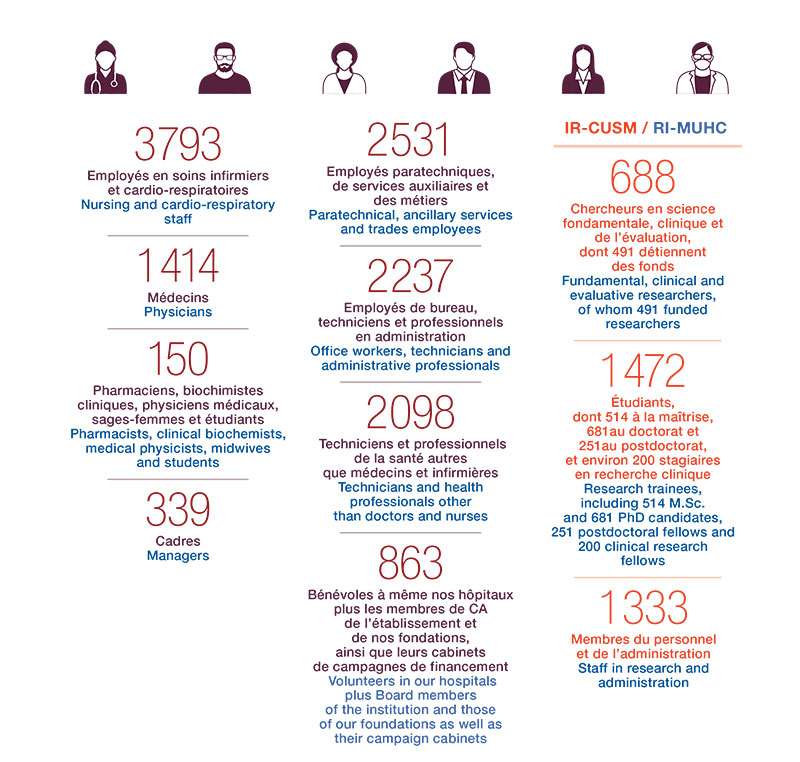
Research: The Research Institute of the MUHC (RI MUHC) is an international research powerhouse. It supports over 600 researchers and over  1,700 graduate and post-doctoral students and fellows devoted to a broad spectrum of fundamental and clinical research producing over 1,400 publications per year. Further, over 1,000 clinical research studies are conducted each year and in the 2009-10 fiscal year, RI MUHC researchers attracted more than $130 million in external funding.

Teaching: The MUHC prides itself on the quality and rigour of its clinical and scientific training. Each year, close to 3,000 people train at the MUHC, including 825 medical and surgical residents, 1,075 nurses, 450 medical students and 525 allied-health students. Continuing education programs are also an integral part of providing the best patient care. All physicians at the MUHC are cross-appointed to the McGill University Faculty of Medicine.

Réseau Universitaire Intégré de Santé (RUIS)

The Québec Ministry of Health and Social Services created four integrated university health networks (RUIS) across Quebec in 2003. The MUHC is the university hospital in the McGill hospital network. The affiliated regions include central and western Montreal, the western part of the Montéregie, Outaouais, Abitibi-Temiscamingue, the Cree territory, James Bay and Nunavik. These territories represent a population of 1.7 million people living across 953,000 square kilometres. The McGill RUIS coordinates tertiary healthcare services, teaching and research activities within this territory and provides specialized care and training activities to the regions.

The New MUHC

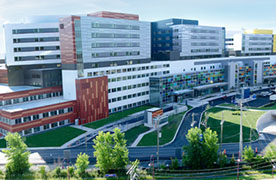
The MUHC is currently carrying out a $2.355-billion Redevelopment Project on three sites—the Montreal General Hospital, the Glen site and the Lachine Hospital—designed to provide healthcare professionals with an effective environment in which to ensure patients and their families benefit from The Best Care for Life.  The campuses are also anchored in best sustainable-development practices, including LEED® and BOMA BESt guidelines. Please click here to learn more about the MUHC’s Redevelopment Project.

Technology Assessment

The MUHC Health Technology Assessment Unit (TAU) is a large body that advises the academic health centre in difficult resource allocation decisions. Using an approach based on sound, scientific technology assessments and a transparent, fair decision-making process, equipment, drugs and procedures used by healthcare professionals are prioritized on a continuous basis ensuring the best care for life with the best use of resources. Since its inception in 2001, over 45 reports have been completed on imaging wait times, percutaneous heart valves, the use of Probiotics, C. Difficile, and deep brain stimulation for the treatment of Parkinson’s disease, among other areas.